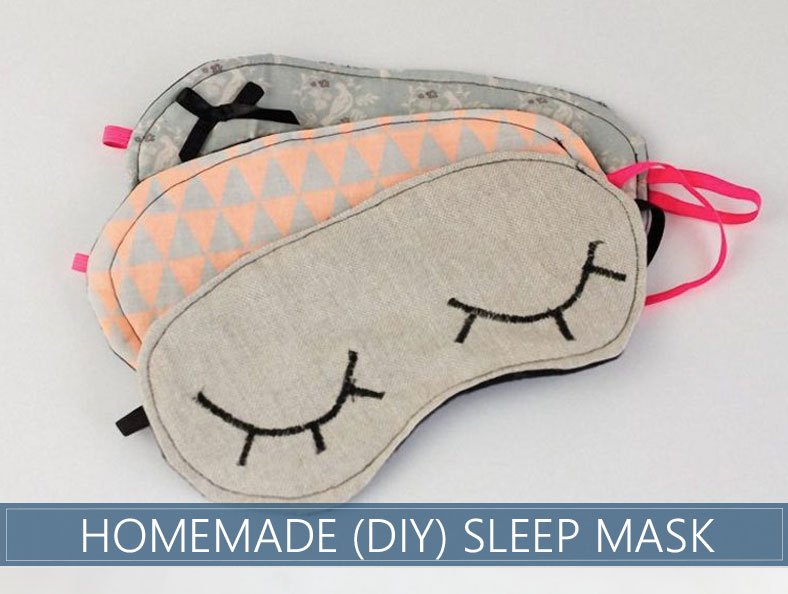
Imagine a world where your wildest dreams for a perfect sleep aid can be conjured into existence with a few keystrokes. That's the power of an AI-driven "text generator"—specifically, a Sleep Mask Text Generator. This isn't about writing a description of a sleep mask; it's about using descriptive text to create the visual design of a sleep mask, whether for a digital concept, merchandise, or even a 3D printable model.
Forget intricate design software or artistic skills you don't have. With the right guidance, you can transform a simple idea into a stunning visual representation of your ideal sleep mask. This comprehensive guide will walk you through every step, turning you into a master of text-to-image generation for personalized sleep enhancement.
At a Glance: Key Takeaways for Generating Your Own Sleep Mask Design
- Prompt is Power: Your text description is the AI's blueprint. Be detailed, specific, and iterative.
- Leverage AI Tools: Platforms like CGDream's AI Mask Generator translate your text into high-quality visual mask images using advanced diffusion models.
- Customize Beyond Basics: Explore Lora styles, visual inputs, and advanced editing features to refine your generated mask.
- Think in 3D: Some tools extend beyond 2D images, allowing you to generate actual 3D models from your descriptions or images.
- Complementary AI for Sleep: Understand that while visual mask generators focus on design, other AI tools (like ASMR AI) enhance sleep through personalized auditory experiences.
- Iterate and Experiment: Don't expect perfection on the first try. Refine your prompts, try different settings, and let creativity flow.
Unleash Your Imagination: What is a Sleep Mask Text Generator?
At its core, a Sleep Mask Text Generator is an artificial intelligence application that interprets natural language descriptions (your text "prompts") and generates visual designs of sleep masks. Think of it as having an endlessly patient, incredibly skilled artist who can bring anything you describe to life—instantly.
These generators leverage sophisticated text-to-image diffusion models, such as Flux or Stable Diffusion, to understand the nuances of your words and synthesize completely new, often highly detailed, images. Whether you envision a minimalist silk mask, a futuristic LED-embedded design, or a whimsical mask adorned with celestial patterns, your text becomes the catalyst. This technology democratizes design, allowing anyone to generate sleep mask content without needing graphic design expertise.
The Canvas Awaits: Getting Started with CGDream's AI Mask Generator
One of the leading platforms offering this capability is CGDream, with its specialized AI Mask Generator. It's designed to be efficient, accessible, and a true fostering ground for creativity.
Signing Up and Navigating the Platform
Before you can start generating, you'll need to access the CGDream platform. Typically, this involves a quick sign-up process. Free users often receive a daily allocation of credits (e.g., 100 daily credits on CGDream) for basic features, allowing you to experiment. Premium plans unlock unlimited credits, commercial usage rights, and advanced functionalities—something to consider as your skills and needs evolve.
Once logged in, locate the "AI Mask Generator" or similar feature. You'll likely find an input field for your text prompt, along with various options for customization.
The Art of the Prompt: Guiding the AI's Vision
This is where the magic truly begins. Your prompt is the single most critical element in determining the quality and accuracy of your generated sleep mask. Think of it as writing a detailed brief for a human designer who can literally create anything you ask for.
Mastering Descriptive Language
Be as specific and evocative as possible. Instead of "a blue mask," try "a luxurious indigo silk sleep mask, deeply padded, with delicate silver embroidery depicting a crescent moon and stars."
- Focus on Key Elements: What's the main subject? (e.g., "a comfortable sleep mask").
- Define Composition and Style: How should it look? (e.g., "minimalist design, close-up shot, photographic quality"). What artistic style? (e.g., "watercolor illustration," "futuristic cyberpunk style," "vintage aesthetic").
- Describing Properties and Textures: What materials, colors, and textures? (e.g., "soft velvet fabric," "smooth satin finish," "iridescent shimmer," "breathable cotton").
- Leveraging Comparisons: Sometimes it helps to compare. (e.g., "looks like a cloud," "resembles an astronaut's visor").
- The Power of Iteration: Rarely will your first prompt be perfect. Generate, observe, refine your prompt, and generate again. This iterative process is key to mastering the AI.
Example Prompt Iteration:
- Initial:
sleep mask(Result: Generic mask) - Better:
blue silk sleep mask(Result: A blue silk mask, still a bit bland) - Even Better:
luxurious indigo silk sleep mask, deeply padded, ergonomic design, subtle silver embroidery of constellations, professional studio lighting, macro shot, photorealistic(Result: Much closer to a specific vision)
CGDream even includes a "DreamUp" option specifically designed to help you refine your prompts for enhanced detail, often by suggesting additions or alternative phrasing. Don't hesitate to use it!
Adding Layers: Lora Styles and Visual Inputs
Beyond just text, advanced generators allow for additional inputs:
- Lora Styles: These are fine-tuned models that can impose a specific artistic style or character onto your generation. Imagine applying a "Pixar style" or a "cyberpunk aesthetic" to your sleep mask design. Experiment with different Lora filters to see how they transform your initial concept.
- Visual Inputs: Some platforms allow you to upload a reference image. While the primary generation is text-driven, a visual input can guide the AI's understanding of shape, color palette, or specific design elements you want to incorporate.
Picking Your Base Model
The base model refers to the underlying text-to-image diffusion model the generator uses (like Flux or Stable Diffusion). Different models can have varying strengths in detail, realism, or artistic interpretation. If your initial results aren't what you expect, try switching the base model to see if it yields a more favorable outcome.
Bringing Your Mask to Life: The Generation Process
Once your prompt is ready and any optional settings are configured, hit the "Generate" button. Mask generation is typically efficient, with results appearing in moments. Review the generated images carefully. Does it capture your vision? Are there elements you love or elements that need tweaking?
Fine-Tuning Your Vision: Editing and Enhancement Tools
Few initial generations are perfect, but that's where the editing suite comes in. CGDream offers powerful tools:
- Applying Lora Filters: Even after generation, you might apply different Lora filters to subtly alter the style, texture, or mood of your mask image.
- AI Image Upscaler: If your generated image is too small or lacks resolution, an AI Upscaler can intelligently increase its size and enhance detail. This often includes options to crop and resize as needed.
- Inpainting for Precision: This is a game-changer. Inpainting allows you to select specific parts of your generated image and describe what you want to change only in that area. For example, if you love the mask but want to change the strap from black to gold, you can highlight the strap and prompt "golden elastic strap."
Understanding Credits and Plans
Remember that platform usage, especially for high-resolution generations or advanced features, often consumes credits.
- Free Tiers: Great for exploration and basic usage, but often come with daily credit limits.
- Premium Plans: Ideal for commercial projects, heavy users, or those needing unlimited generations and advanced capabilities. Always review the terms of service, especially regarding commercial usage rights for AI-generated assets.
From Screen to Reality: Generating 3D Sleep Mask Models
What if you want to move beyond a 2D image and create a physical sleep mask? CGDream extends its AI capabilities to a 3D Model Generator, a remarkable tool that eliminates the need for complex 3D modeling skills. This is a game-changer for product designers, crafters, or anyone wanting to 3D print their custom mask.
The 2D to 3D Leap: Input Methods
The platform can convert both images and text descriptions into 3D models:
- From Photos: Upload a clear JPG or PNG image of your desired sleep mask (or any object). The AI analyzes its shape, structure, shading, and geometry to reconstruct it in three dimensions. Ensure good lighting and defined shapes for the best results.
- From Text: Similar to the 2D mask generator, you can input a detailed text description. The AI interprets your description of shape, structure, and style to build a 3D model from scratch. This means you could potentially go from a text prompt directly to a 3D model of your mask!
Sculpting with AI: Key Customization Options
Once you've provided your input, you gain access to a suite of controls to refine your 3D model:
- Prompt Guidance (Creativity): This setting controls how strictly the AI adheres to your prompt. Higher values result in more detailed and high-contrast models, closely matching your description. Lower values allow the AI more creative freedom, potentially leading to experimental or chaotic—but sometimes surprisingly innovative—variations.
- Seed: A "seed" is a numerical value that initializes the random process of generation. Using the same seed with the same prompt and settings will produce identical results, allowing you to generate variations of the same model by changing only the seed slightly.
- Mesh Mode:
- Quad Mode: Generates models with quad-based (four-sided polygon) topology, which is often cleaner, easier to edit, and preferred for animation or professional 3D work.
- Raw Mode: Produces triangle-based models, which are generally faster and simpler to generate but might have less optimized topology.
- Custom Polygon Count: This setting directly impacts the model's complexity and file size. A higher polygon count results in more detail but a larger file, which can be slower to process or render. A lower count creates a more lightweight model, ideal for quick experimentation or simpler applications.
- Material Settings: Define how your 3D model will be textured and rendered:
- PBR (Physically Based Rendering): Aims for realistic material properties, simulating how light interacts with surfaces (e.g., metallic, rough, glossy).
- Shaded: Uses simpler, solid colors without complex lighting simulations.
- All: A combination, offering a mix of realistic and simplified rendering options.
- Export Format: CGDream offers a wide range of compatible file types for export, ensuring your 3D model can be used in various 3D software, game engines, or 3D printers.
- Quality: Higher quality settings yield more detailed models but extend the generation time beyond the typical 90 seconds. Lower quality is faster, perfect for initial drafts and rapid iteration.
The generation process for a 3D model typically takes around 90 seconds, a remarkable speed for creating complex 3D assets without manual modeling. CGDream also highlights benefits like structured, high-quality results, and optimization for 3D printing.
Beyond the Visual: Crafting Your Auditory Sleep Sanctuary with ASMR AI
While the "Sleep Mask Text Generator" helps visualize your perfect sleep aid, other AI tools focus on creating the perfect auditory environment for sleep. ASMR (Autonomous Sensory Meridian Response) AI technology is designed to customize soothing audio content for individual sleep needs, preferences, mood, or stress levels. This is a complementary, rather than alternative, approach to sleep enhancement.
Personalizing Your Soundscape
To optimize your sleep with ASMR AI, you'll engage with tools that allow you to select specific parameters:
- AI Voice Types: Choose from options like Whisper, Gentle Female, Nature Guide, or Sleep Assistant, each offering a distinct sonic texture.
- Content Types: Tailor the audio to your needs with options such as Progressive Muscle Relaxation, Bedtime Stories, Nature Soundscapes (e.g., rain, forest sounds), or Breathing Exercises.
- ASMR AI Chatbots: Some advanced systems allow you to interact with a chatbot to create highly personalized content, like guided meditation scripts, counting exercises, or nurturing voice content designed to reduce anxiety and provide emotional comfort.
Key Settings for Optimal Sleep
The effectiveness of ASMR AI largely depends on how you configure it:
- Low Volume: Keep the volume gentle and non-disruptive.
- 30-60 Minute Duration: This range is often ideal for falling asleep without prolonged noise.
- Gradual Fade-out: Ensures a smooth transition into deep sleep without an abrupt ending.
- Gentle Looping: For those who prefer all-night comfort, gentle looping of ambient sounds can be very effective.
Building a Bedtime Ritual
An effective routine can significantly enhance the impact of ASMR AI:
- Preparation (30 minutes before bed): Generate your personalized ASMR AI content.
- Wind-down (15 minutes before bed): Start playing the content softly as you begin your bedtime routine (e.g., reading, stretching, dimming lights).
- In Bed: Focus on the sounds, allowing them to gently guide you towards relaxation.
- Overnight Use: If you've chosen looped content, let it play throughout the night.
The Feedback Loop: Refining Your ASMR Experience
Many ASMR AI systems encourage users to rate their sleep quality. This feedback is crucial for the AI to learn your preferences, adjust its algorithms, and continually improve the personalization of its content for you. Combine ASMR AI with established good sleep hygiene practices (consistent bedtimes, a cool and dark room, minimal screen time before bed) for the best results. Experiment with different ASMR AI scenarios to match varied moods and stress levels.
Troubleshooting & Best Practices: Common Pitfalls and Pro Tips
Even with powerful AI tools, you might encounter challenges. Here's how to navigate them:
When Your Prompt Misses the Mark
- Vagueness: If your results are generic, your prompt is likely too vague. Add more adjectives, specify textures, colors, and styles.
- Conflicting Instructions: Avoid contradictory elements in your prompt (e.g., "dark bright red"). The AI might struggle to reconcile these.
- Overly Complex Prompts: While detail is good, a prompt that's too long and convoluted can sometimes confuse the AI. Break it down into key elements.
- Lack of Iteration: Don't give up after one try. Small adjustments to your prompt can lead to significant improvements. Change one word at a time to isolate the impact.
Optimizing for Quality and Efficiency
- Learn from Examples: Many AI generation platforms provide galleries of user-generated content, often with the prompts used. Study these to understand effective phrasing and structure.
- Keyword Experimentation: Try different keywords for similar concepts (e.g., "velvet" vs. "plush," "shimmering" vs. "iridescent").
- Understand Your AI's Strengths: Different base models or generators might excel at certain styles (e.g., photorealism vs. artistic illustration). Experiment to find the best fit for your vision.
- Manage Credits Wisely: For free users, be mindful of your daily credit limit. For premium users, aim for efficient prompt engineering to reduce unnecessary generations.
The Future of Personalized Sleep Aids: Where Do We Go From Here?
The emergence of AI-powered sleep mask text generators and ASMR AI marks a significant leap in personalized wellness technology. We're moving towards a future where sleep aids aren't mass-produced, one-size-fits-all solutions, but rather highly tailored experiences crafted precisely to individual needs and desires.
Imagine integrating these technologies: generating a 3D model of a custom, ergonomically perfect sleep mask from a text prompt, then using ASMR AI to create the ideal accompanying soundscape for deep, restorative sleep. The potential for truly holistic, AI-enhanced sleep optimization is immense, promising not just better sleep, but better overall well-being.
Your Next Step Towards Dreamy Design
You now have the knowledge and a clear step-by-step guide to dive into the world of AI-generated sleep mask designs. Start by experimenting with descriptive prompts, explore the editing tools, and don't be afraid to let your imagination run wild. Whether you're designing a unique gift, creating concept art for a business, or simply indulging your creative side, the power to generate your dream sleep mask is now at your fingertips. Take that first step, craft your prompt, and watch your vision materialize.